
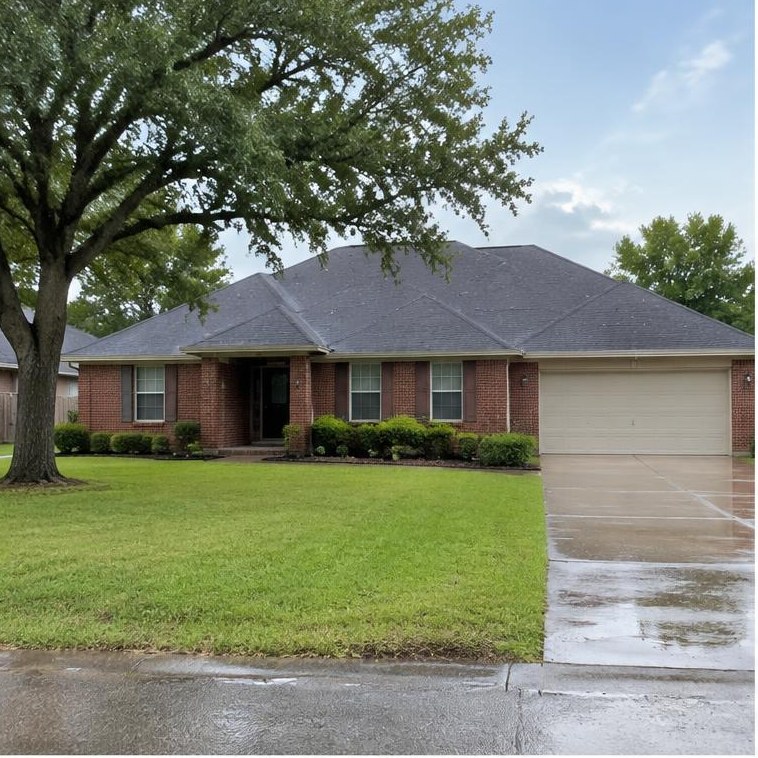
0:51 narrated video with captions
Hail Damage Roof Repair in Edmond, OK: What to Check and Ask
Takeaway: After suspected hail in Edmond, note the date and what you can see safely.
Read the transcript
After suspected hail in Edmond, note the date and what you can see safely. Do not assume a dent proves a roof leak, storm size, or covered claim. Dents in vents can be part of the evidence. A professional should document their location and assess nearby roofing separately. Metal marks alone do not settle the repair scope. Shingle marks and granule loss need context. Ask which findings are consistent with damage and which may reflect wear. Do not climb onto the roof to investigate yourself. Ask for a documented scope addressing confirmed faults. Insurance coverage and payment are separate decisions under your policy. No photograph here promises a claim outcome or full roof replacement. Have safe photos, dates, and your property ZIP ready. Request a hail assessment, not a guaranteed approval. These example images teach what questions to ask; they are not local job evidence.
AI-made example scenes and AI voice, not footage from a verified Edmond property or customer job.
What hail damage looks like
Up close, hail leaves clues.
- Dark spots where granules were knocked off
- Soft, bruised spots on shingles
- Cracked or broken shingles
- Dents on vents, gutters, and downspouts
- Granules piling up at downspout exits
Why timing matters
Most insurance policies have a time limit for filing a claim after a storm. Getting an inspection soon after hail keeps your options open, even if you decide not to file.
Check from the ground first
Look at soft metal: gutters, mailbox, AC unit fins, and your car. If they have dents, your roof likely took hits too.
Failure diagnostics: what to look for
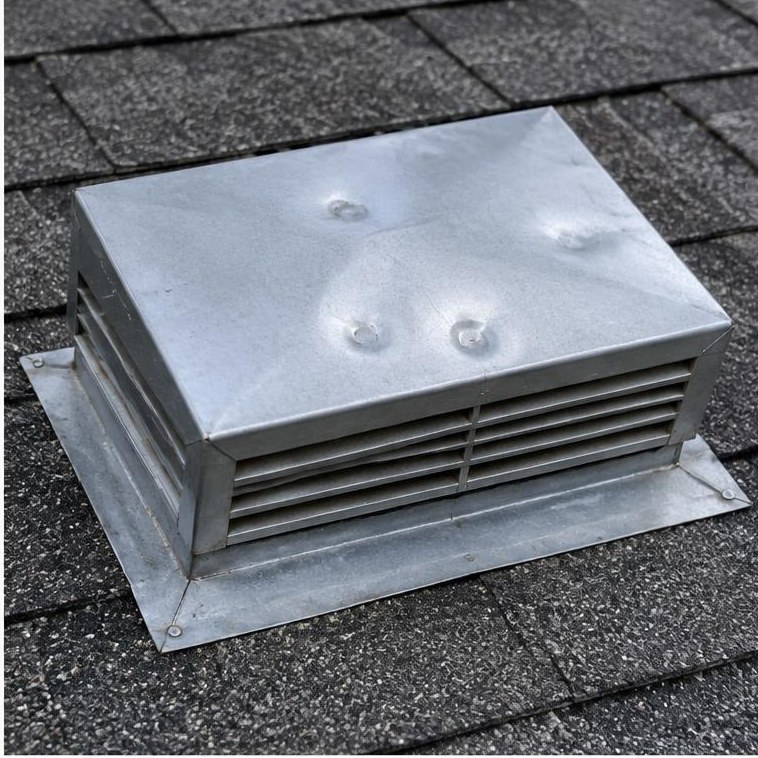
Dents on a metal vent
- What You See
- Dents or damage appear on a metal roof component.
- The Hidden Hazard Below
- Dents do not establish hail size, a roof leak, or an insurance outcome by themselves.
- The Correct Repair
- Ask for dated observations and a separate assessment of nearby roof materials.
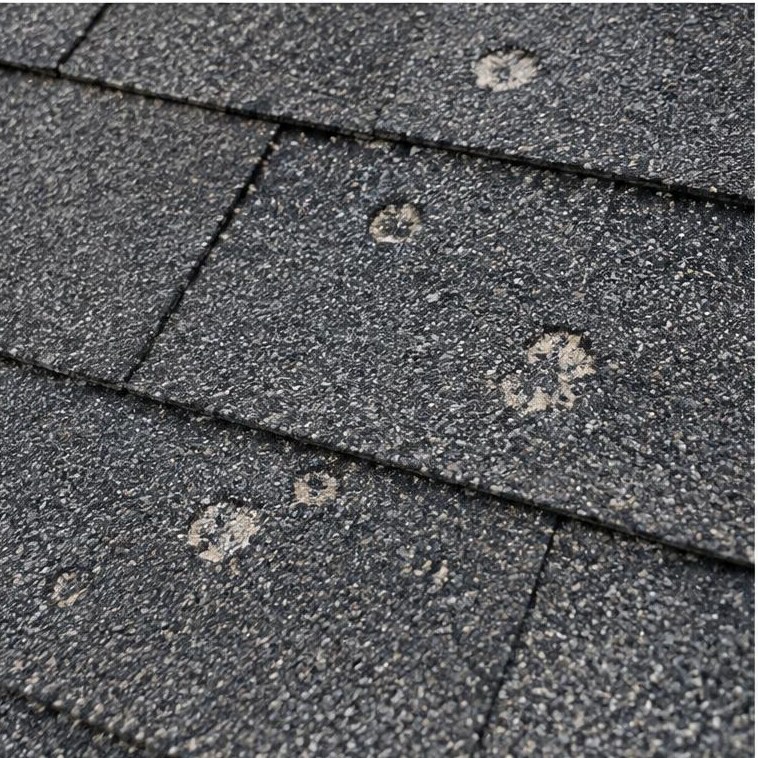
Granule loss on shingles
- What You See
- The roof surface shows wear, creases or a missing section.
- The Hidden Hazard Below
- A surface defect may expose lower layers. The extent and cause cannot be settled from this example.
- The Correct Repair
- Ask whether localized repair can integrate with sound materials and which findings justify broader work.
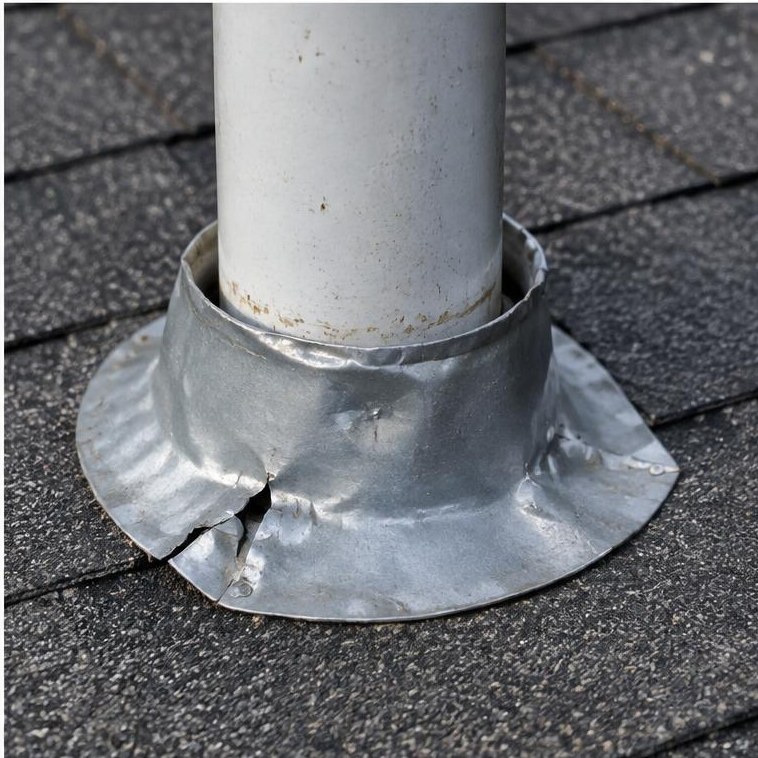
Plumbing vent flashing
- What You See
- This is a roof-to-wall or chimney junction.
- The Hidden Hazard Below
- Water may pass behind loose, worn or poorly integrated flashing. The concealed layers are not visible here.
- The Correct Repair
- Ask for an explanation of the flashing layers and a written scope that addresses the confirmed fault.
AI-made educational examples, not photos of verified local properties or customer jobs. These images do not diagnose your roof.